
January 26, 2026
The Limits of Night Vision Most Buyers Ignore (and Why That Matters)
Night vision is powerful, but it is not magic. Understanding limitations prevents false confidence and expensive mistakes.
Night vision amplifies light — it doesn’t create it
A core misunderstanding is assuming NV creates visibility. Image intensification amplifies existing photons. If there is little usable light, the system has less to work with. That does not mean ‘it fails’; it means the environment defines the outcome.
This is why moon phase, cloud cover, and canopy density matter. In real use, you will feel the difference night to night.
Weather is not a detail — it is a performance variable
Fog scatters and absorbs contrast. Rain introduces reflections and reduces clarity. Smoke and dust obscure. These conditions can reduce usable range and increase noise. The result is fatigue and overconfidence risk: you think you saw something, but you did not confirm it.
Professional use respects this. Operators slow down, increase confirmation checks, and avoid acting on ambiguous impressions.
Urban light pollution: the invisible opponent
In cities and suburbs, light spill changes everything. Your NV may handle it well, or it may force constant adaptation. Light pollution can reduce contrast where you need it most. It can also create misleading ‘bright’ areas that hide detail.
The practical fix is not buying a device and expecting it to solve the environment. The fix is learning to interpret the scene and adjusting your behavior: scanning for edges and movement, not for perfect clarity.
Infrared illumination: helpful, but not free
IR can extend usability in low-light conditions, but it introduces tradeoffs: it can reveal your presence to others with IR capability, and it can create a ‘flashlight effect’ that changes how you interpret terrain.
The correct approach is disciplined use: only when needed, at the lowest useful output, and paired with awareness that IR changes the tactical picture.
The real risk: overconfidence
Most accidents and bad decisions occur when users move as if they have daylight certainty. Under NV, certainty is lower. Depth cues are different. Peripheral awareness is reduced. If you act as if you are sure, you are not being brave — you are being blind.
The antidote is doctrine-like behavior: move slower, confirm more, and build routines that keep you calm.
A realistic expectation checklist
Ask yourself: do I understand my environment? Do I know what ‘good’ looks like in my conditions? Do I have a stable mount and a practice plan? If not, no device will fix that.
Night vision multiplies skill. It does not replace it.
Practical drill: Choose a safe, familiar area. Spend 10 minutes moving slowly using Stop → Look → Move. Every 3–5 steps, scan near/mid/far lanes. This is boring — and that is why it works. Boring routines create predictable performance.
Common failure mode: New users chase perfect image clarity and continuously adjust focus. This creates fatigue and reduces awareness. Instead: pick functional clarity, commit for a sequence, and only adjust after you’ve confirmed the environment changed.
Environmental variables: Moon phase, cloud cover, tree canopy, urban light spill, and reflective surfaces can change perceived performance. The right question is not “how far can I see?” but “how consistent is the image across the conditions I actually face?”
Safety note: NV reduces your field of view and changes depth cues. Do not sprint, do not drive, and do not attempt complex terrain until you have trained. Most accidents happen because users move like it’s daytime.
Decision model: Evaluate equipment by the outcome it creates: confidence, control, and reduced cognitive load. If the device forces constant management, it is failing its job even if the picture looks impressive for a moment.
Why night vision myths persist
Marketing favors certainty. Reality favors nuance.
Myths survive because many users never test limits safely.
Light discipline and self-sabotage
Users often unknowingly sabotage themselves by moving between radically different light zones too quickly.
Give your eyes and device time to adapt.
IR misuse patterns
Overusing IR creates false confidence and dependency.
Used sparingly, IR is a tool. Used constantly, it becomes a liability.
Environmental humility
The best operators respect the environment.
If conditions degrade, they slow down or stop.
Why accidents cluster early
Most incidents happen in the first few sessions, before habits form.
Structured practice reduces this risk dramatically.
Accepting uncertainty
Night vision does not eliminate uncertainty — it changes how you manage it.
Accepting this makes you safer and more effective. For the technical reasons behind those limits, our night vision technology guide explains the physics of image intensification, thermal sensitivity, and IR illumination.
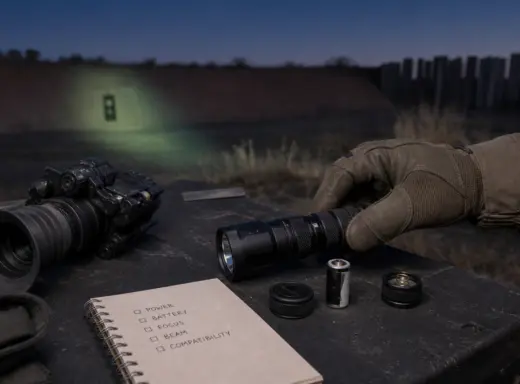
IR Illuminator Not Working With Night Vision? Beam, Battery, Focus and Compatibility Check.
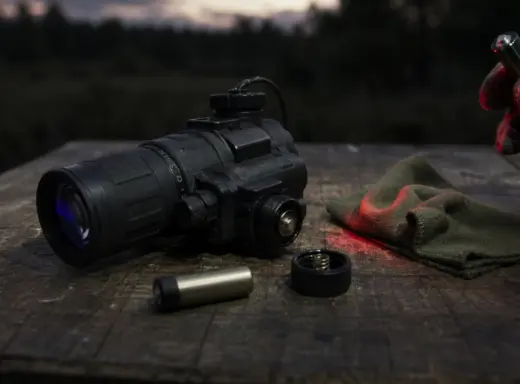
Is your NV not turning on? Battery, Contacts, Mount and Tube-Safe Troubleshooting
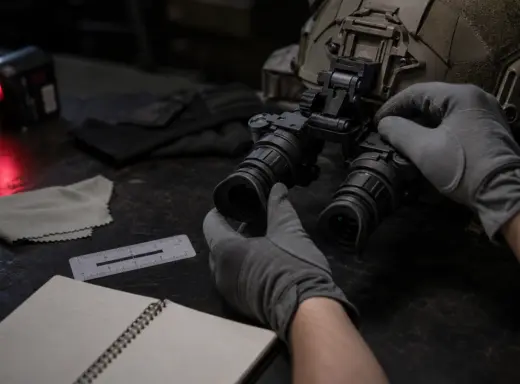
Night Vision Collimation and Alignment: Fix Double Vision, Eye Strain and Dual-Tube Setup Issues