
January 26, 2026
Field Testing vs Specs: Why Real Conditions Decide Night Vision Performance
Specs describe potential. Field testing reveals behavior — and behavior is what you live with in the dark.
Specs are not lies — they are incomplete
Spec sheets are useful, but they are snapshots. They describe what a device can do under controlled assumptions. Field conditions do not respect those assumptions. Ambient light changes. Weather changes. Your mount alignment is imperfect. Your attention is finite.
When buyers make decisions based only on specs, they often blame hardware for problems created by setup or unrealistic expectations. NV Guide USA treats specs as one signal — not as proof.
What field testing reveals that specs cannot
Field testing reveals behavior: how quickly the image stabilizes after movement, how the device responds to sudden light spill, and how forgiving it is when focus is slightly off. It also reveals fatigue: whether the system encourages constant micro-adjustments or supports a calm routine.
Two devices can look similar on paper and feel radically different after 30 minutes. That difference is not always about raw image quality. It is about usability under pressure.
The hidden variable: system ergonomics
Night vision is not only a device. It is a system: mounting, balance, comfort, and the user’s ability to keep their head stable. Poor balance increases neck fatigue. Neck fatigue changes posture. Posture changes what you see. Suddenly the ‘image quality’ feels worse.
This is why professional users obsess over comfort. Comfort is performance. If you cannot keep the system on for long, you cannot build skill.
A practical evaluation framework
Instead of asking “what has the best specs,” ask: what has predictable performance in my environment? What reduces cognitive load? What can I use for 30–60 minutes without fighting it?
Create a simple scoring approach: stability under movement, recovery after light transitions, ease of control use with gloves, and fatigue after a full session. These categories mirror real use.
Why buyers misinterpret ‘range’
Range is often discussed as if it is a fixed number. In reality, range is a function of conditions and task. Detecting a human silhouette is different from identifying an object. Fog, haze, and urban glow can compress range dramatically.
The correct question is: what range is reliable for the tasks I actually perform? And how much training am I willing to invest to achieve that reliability?
What NV Guide USA recommends
Start with the environment and the task. Then prioritize a stable setup and disciplined practice. If you do that, many devices that look ‘less impressive’ on paper deliver better real outcomes because they are easier to live with.
Field testing mindset is the difference between buying gear and acquiring capability.
Practical drill: Choose a safe, familiar area. Spend 10 minutes moving slowly using Stop → Look → Move. Every 3–5 steps, scan near/mid/far lanes. This is boring — and that is why it works. Boring routines create predictable performance.
Common failure mode: New users chase perfect image clarity and continuously adjust focus. This creates fatigue and reduces awareness. Instead: pick functional clarity, commit for a sequence, and only adjust after you’ve confirmed the environment changed.
Environmental variables: Moon phase, cloud cover, tree canopy, urban light spill, and reflective surfaces can change perceived performance. The right question is not “how far can I see?” but “how consistent is the image across the conditions I actually face?”
Safety note: NV reduces your field of view and changes depth cues. Do not sprint, do not drive, and do not attempt complex terrain until you have trained. Most accidents happen because users move like it’s daytime.
Decision model: Evaluate equipment by the outcome it creates: confidence, control, and reduced cognitive load. If the device forces constant management, it is failing its job even if the picture looks impressive for a moment.
Why buyers overtrust numbers
Numbers feel neutral and scientific, but they hide context.
A spec measured in a lab does not account for fatigue, stress, or environmental chaos.
Case study: similar specs, different outcomes
Devices with nearly identical specifications can behave differently due to processing, ergonomics, and mounting balance.
Field testing exposes these differences within minutes.
Cognitive load as a hidden cost
A system that requires constant attention steals mental bandwidth.
At night, cognitive overload leads to poor decisions faster than poor image quality.
What professionals log during testing
Professionals track not only what they see, but how often they adjust, how tense their posture becomes, and when fatigue sets in.
These notes matter more than screenshots.
Why demo environments mislead
Controlled demos remove stressors that dominate real use.
Always test in the environment you expect to operate in. To understand why spec numbers often don’t translate to field performance, our how night vision technology works guide explains the physics behind the numbers.
Choosing boring gear on purpose
Professionals often choose equipment that feels boring.
Boring gear is predictable gear — and predictability is safety.
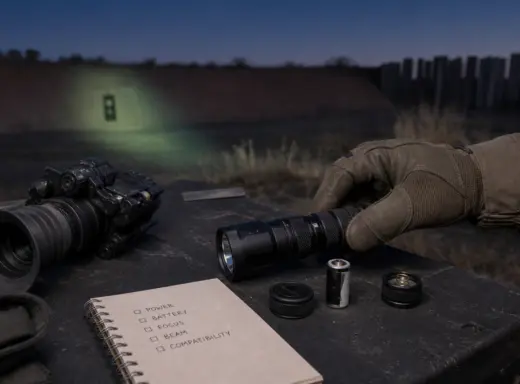
IR Illuminator Not Working With Night Vision? Beam, Battery, Focus and Compatibility Check.
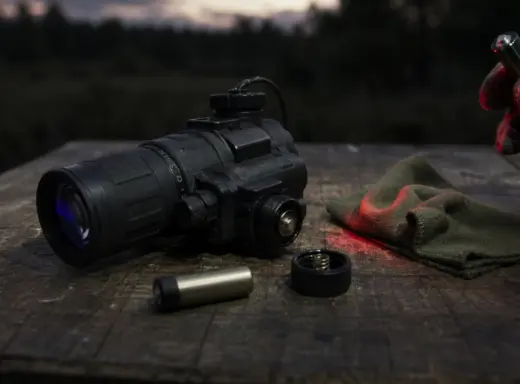
Is your NV not turning on? Battery, Contacts, Mount and Tube-Safe Troubleshooting
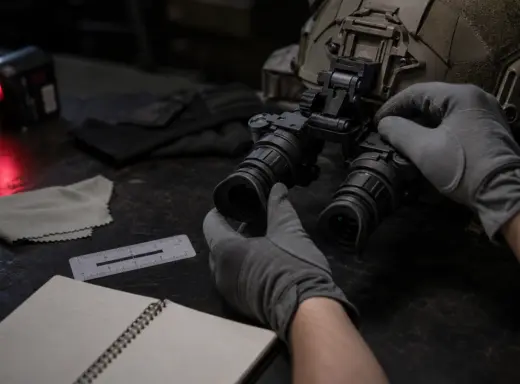
Night Vision Collimation and Alignment: Fix Double Vision, Eye Strain and Dual-Tube Setup Issues