
February 18, 2026
Gen 2 vs Gen 3 Night Vision — Complete Buyer’s Guide 2026
Gen 2 and Gen 3 Night Vision — The Truth After 14 Years in the Business
After 14 years in the night vision retail business, one thing is clear: too many people ask the same question every week — “Should I buy Gen 2 or Gen 3?” Honestly, this question gets answered thousands of times. But here’s the full breakdown, because frankly — too many people are spending money they shouldn’t, buying stuff that’s completely wrong for them.
Let’s Talk Numbers First — Don’t Get Fooled
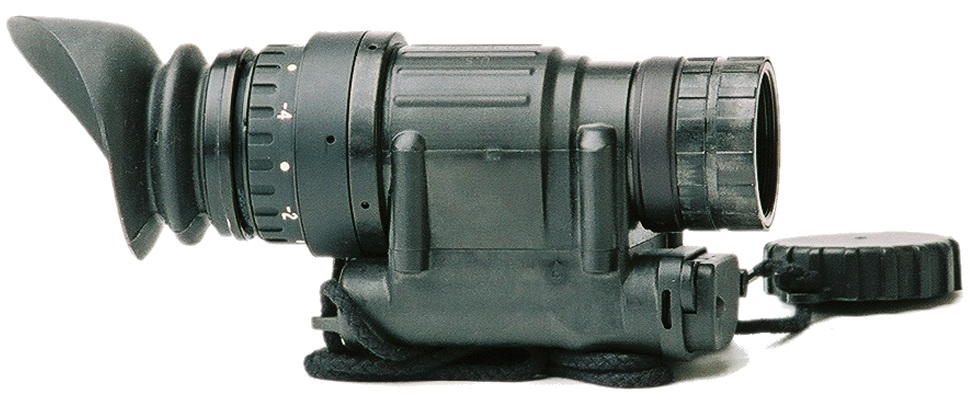
A lot of people start by asking about price. Fine, here’s the price. But you’ve got to understand what’s behind those prices.
Gen 2 resolution is typically 45-54 lp/mm, Gen 3 is 64-72+ lp/mm (source: nightflightconcepts.com). Sounds like Gen 3 is much better right? It is. But the question is — do you really need that much resolution? Are you identifying targets at 300 yards, or shooting hogs in your backyard?
Gen 2 light amplification is about 20,000x, can see targets within 200 yards in complete darkness. Gen 3 is 30,000 to 50,000x, can see 300+ yards (source: nightflightconcepts.com). The numbers are scary. But here’s the thing: the reality is, 80% of buyers don’t need that kind of distance.
Tube Lifespan — This Is the Big One
Gen 2 tube lifespan is 2,500 to 5,000 hours. Gen 3 is 7,500 to 10,000+ hours (source: nightflightconcepts.com). Sounds like a big difference? Here’s the math: say you use it 4 hours a week, about 200 hours a year. Gen 2 can last 12 to 25 years, Gen 3 can last 37+ years.
37 years! Are you planning to use the same night vision device for 37 years? Don’t make anyone laugh. In 10 years the technology will be completely different. So tube lifespan… don’t take it too seriously.
FOM Series — Only People Who Know Their Stuff Look at This
If you’re really going to buy Gen 3, FOM (Figure of Merit) is what you need to look at. L3Harris tubes are divided into these tiers:
- 18 Series (18UM/18UA): FOM minimum 1540
- 20 Series: FOM minimum 1792
- 22 Series: FOM minimum 1920
- 24 Series: FOM minimum 2160
- 1610 Tubes: FOM 2376+ (source: apollogearco.com)
Bigger number is better? Yes. But the price is also higher. From 1540 to 2376+, the price difference can be over a thousand dollars.
Spot Specs — The Difference Between Military and Aviation
A lot of people don’t know this. L3Harris tubes have two specs: UM (Military) and UA (Aviation).
Military spec (UM tubes): Zone 2 and Zone 3 can have spots larger than .003 inches, maximum 4 spots. Aviation spec (UA tubes): only Zone 3 can have spots — this is the strictest (source: apollogearco.com).
Why is aviation so strict? Because the FAA requires it. Pilots’ night vision must be Gen 3, and there’s a 180-day inspection cycle. Hunting on the ground? No such requirement. Don’t waste money on aviation spec.
Autogating — Gen 3’s Real Advantage
Okay, Gen 3 has one thing that’s really impressive: autogating.
When you suddenly encounter bright light from a dark environment — like headlights from an oncoming car — Gen 3’s autogating can instantly adjust brightness, won’t blind your eyes, and the image won’t distort. Gen 2? Either doesn’t have this feature, or reacts very slowly (source: nightflightconcepts.com).
For law enforcement, constantly going in and out of different lighting environments, this feature is worth the price difference. But just going to your own land on weekends to shoot hogs — honestly, you don’t need it.
Let’s Talk Prices — The Bloody Reality
Here’s how the market looks right now:
- AGM PVS-14 NL1 Gen 2+: $2,995 (source: nightvisionuniverse.com)
- PVS-14 Elbit Gen 3 WP: $2,795-$4,495 (source: reddit/apollogearco)
- PVS-14 L3Harris Unfilmed: $3,795+ (source: nighthawkvision.com)
Someone on Reddit put it straight: “L3Harris Gen3 Thin Filmed GP: $3200 vs Elbit Gen3 TF WP: $3000” (source: r/NightVision). Elbit is a solid budget Gen 3 option.
See that? Gen 2+ $2,995, entry-level Gen 3 is about the same price. So why not just buy Gen 3? Good question. Because that $2,795 Elbit is often out of stock, and you still need to add a mount. Wilcox G24 Mount is $499+ (source: tnvc.com). Just like that your budget shoots up.
ITAR — This Needs to Be Said
Gen 3 night vision is controlled under USML Category XII. What does that mean? It means you can’t sell to foreigners, can’t take it out of the US, violations have severe criminal and civil penalties (source: tnvc.com/apollogearco).
Even the Wilcox G24 Mount is ITAR controlled! A $499 plastic bracket! (source: tnvc.com)
Some people think it’s fine to take it to Mexico for hunting. Think twice. ITAR’s no joke.
Hunters — Look Here
About 40% of states prohibit using night vision for hunting (source: cosmictactical.com). Texas, Florida, Georgia you can. California? You can own it, but can’t use it with a gun for hunting. Pennsylvania, Rhode Island outright ban it.
Check your state’s laws before you buy. Don’t buy a $4,000 piece of equipment and then find out you can’t use it.
The Bottom Line
After all that, what should you actually buy?
If your budget’s limited, your use is weekend hunting, home defense — Gen 2+ is enough. Don’t let people fool you into thinking you need Gen 3. AGM’s Gen 2+ has solid performance, reasonable price.
If you’ve got money, want the best, or you’re law enforcement, security personnel who needs to work in various environments — buy Gen 3. Choose Elbit for entry-level, or L3Harris if you want the best tubes.
Don’t buy just because someone says “Gen 3 is for real men.” That’s their money, not yours. What matters is whether you’ll actually use it.
After 14 years in this business, too many people buy $5,000 equipment and let it collect dust in the cabinet. Also seen $3,000 Gen 2+ being used to death. Tools are for using, not for showing off.
Think clearly before you spend money. That’s the bottom line. For a full technical explanation of what separates the generations at the physics level, our night vision technology guide goes deep on tube design, photocathodes, and image intensifier mechanics.
IR Illuminator Not Working With Night Vision? Beam, Battery, Focus and Compatibility Check.
Is your NV not turning on? Battery, Contacts, Mount and Tube-Safe Troubleshooting
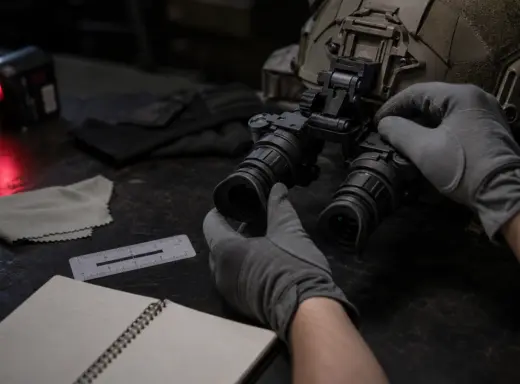
Night Vision Collimation and Alignment: Fix Double Vision, Eye Strain and Dual-Tube Setup Issues