
March 18, 2026
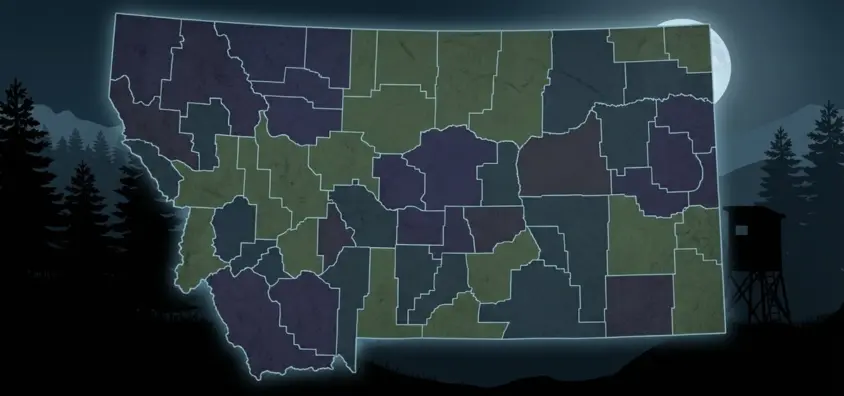
Night Vision Hunting Laws by State: 2026–27 Guide
Quick answer: Do not assume night-vision or thermal equipment is legal for hunting just because night hunting is allowed. Rules can depend on the state, species, land type, season, and the exact device. Check the current wildlife-agency regulations for the place and hunt you plan to make.
Scope note: This is a practical guide with selected, source-checked examples—not a complete legal determination for all 50 states. Regulations can change during a season. Last reviewed November 18, 2026; confirm the current official rules before hunting.
What to check before using night vision or thermal
- Species and season: Rules for coyotes or feral hogs may differ from rules for deer, bear, migratory birds, or other game.
- Land type and location: Private land, public land, wildlife-management areas, and special hunting areas can have different restrictions. Area-specific brochures may add stricter rules.
- Device category: Regulations may distinguish image-intensifier night vision, infrared illumination, thermal imaging, visible lights, lasers, and electronic scopes. Do not assume one term covers every device.
- Use and possession: Some rules address not only taking an animal, but also possessing, using, or carrying equipment while hunting, scouting, locating, or reporting wildlife.
- Current rule year: Check the edition and effective dates of the official regulation—not an old digest, forum post, or third-party summary.
Selected state rules to note for 2026–27
Florida: check public-area restrictions separately
For 2026–27, the Florida Fish and Wildlife Conservation Commission approved nighttime restrictions on taking wildlife with a gun equipped with a thermal, night-vision, or similar device on Public Small Game Hunting Areas, Wildlife Management Areas, and Wildlife and Environmental Areas. The prohibited period is 30 minutes after sunset through 30 minutes before sunrise; most of the approved rule changes took effect July 1, 2026. Area-specific brochures may add rules, so check the current brochure and Florida Hunting Handbook for the exact location and hunt. This public-area restriction should not be generalized into a blanket statement about every private-land situation.
FWC: approved 2026–27 hunting rule changes · FWC: current hunting regulations
Oregon: thermal and night-vision use is not a general predator-hunting option
Oregon Department of Fish and Wildlife says thermal devices may not be used to hunt, locate, or scout wildlife for the purpose of hunting. Its legal-methods guidance for game mammals specifically lists infrared—including thermal and night vision—among prohibited sighting equipment. The rule’s wording and scope matter: read the current Oregon Administrative Rules and the species-specific regulations rather than relying on a broad claim that predator night hunting is allowed.
ODFW: legal hunting methods and weapon restrictions · ODFW: regulations limiting technology during hunting seasons
Washington: restrictions cover use and possession
Washington’s current equipment rule prohibits use or possession of infrared or night-vision equipment and thermal imaging devices (with a trail-camera exception) while hunting, spotting, locating, or reporting big game for hunting, unless authorized by a director’s permit. For other wildlife, it sets a separate restriction during the modern-firearm deer and elk seasons. The current amended language took effect September 28, 2026; check the Washington Administrative Code and season dates before hunting.
Washington Administrative Code § 220-414-010: hunting equipment restrictions
Texas: do not equate “non-game” rules with blanket device approval
Texas publishes a current 2026–27 list of lawful and unlawful hunting methods. It prohibits hunting a game animal or game bird with artificial light that casts or reflects a beam onto, or otherwise illuminates, the animal or bird. That wording alone should not be used to declare every thermal or night-vision device legal or illegal. Texas also treats feral hogs and other non-game animals under separate rules. Verify the species, property type, applicable public-land rules, and the exact device with Texas Parks and Wildlife before relying on a general summary.
Texas Parks & Wildlife: 2026–27 hunting means and methods · Texas Parks & Wildlife: nongame and other species
Why broad “legal/illegal by state” summaries can mislead
A state may allow hunting at night for one species but prohibit a particular device, restrict it on public land, or prohibit having it in possession while hunting. A rule about artificial light may not answer how a state treats passive image intensification or thermal imaging. Conversely, a rule may expressly name infrared, thermal, or night-vision devices. Read the operative rule and definitions—not just a headline or summary table.
This article is not a verified 50-state lookup table. The examples above illustrate why a reliable answer requires checking the current official rule for the specific hunt. Before traveling, confirm the state rule, the relevant land manager’s rules, and any county or municipal restrictions that apply.
How to verify the rules for your hunt
- Open the current hunting regulations from the state wildlife agency and confirm the publication year or effective dates.
- Search the official document for “night vision,” “infrared,” “thermal,” “electronic,” “artificial light,” and the species you plan to hunt.
- Check the rules for the exact public area or management unit. Use its current brochure or land-manager rules as well as the statewide digest.
- If the text does not clearly cover your device or situation, ask the state wildlife agency or land manager for written clarification before the hunt.
- Recheck shortly before the trip; proposed or approved rule changes may have different effective dates.
Night-vision hunting laws and federal export controls are separate
State hunting rules govern whether and how equipment may be used during a hunt. Federal export-control rules concern taking certain equipment or technical data outside the United States. These are different questions. For export-control background, see our ITAR and night-vision export laws guide. For a primer on device generations, see Night Vision Generations Explained.
Frequently asked questions
Is night vision legal for hunting in every state?
No single yes-or-no answer applies nationwide. Rules vary by state, species, season, land type, device, and whether the rule covers use, possession, scouting, or locating wildlife. Check the current official rules for the specific hunt.
Are thermal optics treated the same as night-vision goggles?
Not always. Some regulations name thermal imaging and night vision separately; others use broader terms such as infrared or electronic sighting equipment. Read the definitions and operative language in the current regulation.
If night hunting is allowed, can I use a thermal scope?
Not necessarily. Permission to hunt at night does not automatically authorize every optic or light. Device restrictions may be separate from shooting hours and may differ on public areas.
Can I rely on a hunting-law summary from an earlier year?
No. Seasons and equipment rules can change. Use the current wildlife-agency regulation and any area-specific brochure, and contact the agency if the rule does not clearly address your equipment.
Official sources
- Florida Fish and Wildlife Conservation Commission: approved 2026–27 rule changes
- Florida Fish and Wildlife Conservation Commission: hunting regulations
- Oregon Department of Fish and Wildlife: legal hunting methods
- Oregon Department of Fish and Wildlife: technology restrictions
- Washington Administrative Code § 220-414-010
- Texas Parks & Wildlife: 2026–27 means and methods
- Texas Parks & Wildlife: nongame and other species
This article provides general information, not legal advice. Regulations and effective dates may change. Confirm the current rules with the responsible state agency or land manager before hunting.
IR Illuminator Not Working With Night Vision? Beam, Battery, Focus and Compatibility Check.
Is your NV not turning on? Battery, Contacts, Mount and Tube-Safe Troubleshooting
Night Vision Collimation and Alignment: Fix Double Vision, Eye Strain and Dual-Tube Setup Issues