
June 7, 2026
Thermal Scope Rangefinders Explained: Is a Built-In LRF Worth It for Hunting?
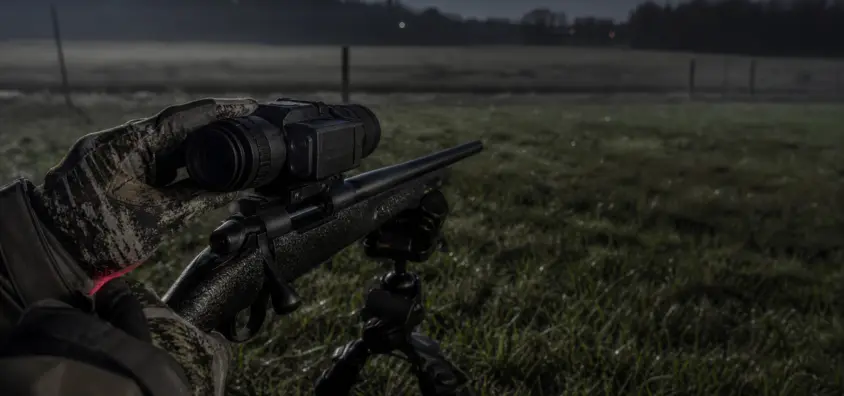
Though it may be a great benefit for night hunting, a thermal scope with rangefinder isn’t necessarily the top purchase. It is most valuable when distance is always a factor: open pastures, coyote stands, unfamiliar properties, shots where bullet drop becomes a factor. It isn’t quite as important when you’re hunting hogs at short range over known feeder distances, or when you would rather spend the money on better thermal image quality.
See LRF as decision support. It will answer one question: what is the range to the target? It’s not a substitute for good muzzle discipline, it won’t correct a poor zero, nor will it make a marginal thermal image acceptable.
The Short Version
If you tend to hunt longer lanes, open fields, rolling ground, or coyotes that halt at odd distances, a built in rangefinder thermal scope is of value and worth the price. It can also benefit hunters who utilize verified ballistic holds and do not wish to carry as many devices while hunting in darkness.
For close hog setups, bait locations with pre-ranged landmarks, or budget builds where sensor resolution is more important than anything, built-in LRF is typically not necessary. When you select either a clearer non-LRF optic or a weaker thermal scope LRF model, purchase plenty of image first. LRF cannot make up for bad identification, poor zero confirmation, or unsafe shot decisions.
What Is a Thermal Scope Rangefinder?
A thermal scope rangefinder is a rangefinder feature that is used via a thermal optic. It allows the hunter to read yardage in or near the scope without changing to another device in a rifle scope setup.
Built-In Laser Rangefinder vs Estimated Distance
A thermal scope with laser rangefinder is the type of thermal scope that takes advantage of the laser return to calculate the distance. The hunter ranges the area and obtains a distance reading, evaluating if the shot is suitable for the rifle, zero, cartridge, wind, angle, and target action.
Estimated ranging is not the same. Target size bracketing or digital tools are used by some optics. This can assist with approximate distance but is dependent on the size of the animal assumed and its positioning. The apparent size of a quartering coyote is different than that of a hog partly hidden in grass and a broadside animal.
Thermal image size is a poor distance estimator as base magnification, digital zoom, field of view, display scaling, brush, and animal posture change image size.
What LRF Means in Thermal Scope Model Names
When you’re discussing LRF, it typically refers to laser rangefinder, but model names aren’t sufficient. Check if the optic has a true built-in laser rangefinder, estimated ranging, a distance display only, or ballistic integration. Other product pages may refer to such things as VRF, rangefinder, onboard profiles, or ballistic calculator. Don’t take those as facts unless they have been confirmed.
Why Range Matters More at Night Than Many Buyers Expect
Thermal is a great way to spot living targets, but it can also take away daylight cues from the hunter for determining distance. Shadows, color, depth, and background detail is diminished. This is where a rangefinder for night hunting can come in handy for new thermal buyers.
Thermal Makes Detection Easier Than Distance Judgment
Detection, recognition, identification, and ranging are different steps. Detection is seeing heat. Recognition means it appears to be an animal. Identification is simply having enough knowledge of whatever it is to make a lawful and ethical decision without any doubts. In ranging, you are aware of the distance.
This is why it helps to separate thermal detection, recognition, and identification before thinking about range.
Ethical Shot Placement and Bullet Drop
Distance is an issue, as bullets fall, and by how much is a function of the rifle, the cartridge, the bullet, the velocity, the distance they were zeroed at, the height of the optic, and conditions. Only when the data is verified can a thermal scope with ballistic calculator help. False confidence can be caused by bad profiles, stale zero data, or misunderstood holds.
That makes thermal scope settings and zeroing profiles and knowing how to zero a thermal rifle scope part of the same decision.
Coyote Hunting vs Hog Hunting Distance Needs
Coyote hunting with a thermal scope rangefinder can frequently pay for itself due to the coyote’s habit of hanging up, circling, and pausing at distances which are difficult to estimate at night. Using a hog hunting thermal scope rangefinder can still help, though many shots on a hog are taken at close to moderate range at feeders, roads, senderos, or brush edges where the distance can be known in advance.
Built-In LRF vs Handheld Rangefinder vs Scanner With LRF
There’s no one right setup. The selection will depend on whether you need speed on the rifle, safer scanning, or lower cost.
Built-In LRF on the Rifle Scope
The built in LRF thermal scope keeps ranging within the shooting view. That’s quick if an animal is running or if you’re alone hunting. The compromises include cost, weight, balance, controls, and battery requirements. This additional weight from the optic might be noticeable on an AR-15 from a tripod or long walks between stands.
Separate Handheld Rangefinder
Choosing between handheld rangefinder vs built in rangefinder boils down to workflow. A hand-held unit can be a handy piece of equipment for scouting during daylight hours and presetting fixed points. It can be slow at night, too, as you have to take care of another piece of equipment, range properly, then reacquire the animal through the scope.
Thermal Monocular With Rangefinder
An often safe scanning solution is the thermal monocular with rangefinder. So you can detect, observe, and range without pointing a rifle at everything you want to inspect. The rifle is then only raised when the target is identified and a shot is warranted.
For that role, thermal monoculars for scanning are often a cleaner fit than using the rifle scope for everything.
When a Built-In LRF Is Worth Paying For
Open Fields and Longer Shot Opportunities
Clear spaces may deceive night time distance judgment. An edge that appears close in the screen might be far enough to alter your hold. When you regularly find yourself spotting animals outside point and shoot range, a laser rangefinder thermal scope is helpful.
Coyote Hunting and Predator Setups
Predator hunters do not often find long shot opportunities. Coyotes can stop just for a few seconds before turning or going away. A thermal scope distance measurement function allows you to verify distance within the optic.
Unknown Terrain or New Properties
Fencelines, terraces, tree rows, and dips may not be located where they are showing on thermal when placed on new ground. Built-in LRF gives you confidence when animals appear outside your pre-ranged landmarks.
Ballistic Calculator Workflows
LRF can enhance the speed of the system if the optic supports ballistic profiles. Value is based on firm rifle facts and a process that you can be confident of when it comes to pressure. Bad data is bad data, even at a distance.
Hunters Who Need Fewer Devices in the Dark
Gloves, calls, remotes, tripods, batteries, and moving animals make gear management difficult. Some hunters find that a thermal rifle scope with rangefinder saves steps and helps to keep the shot process cleaner.
When You Can Skip Built-In LRF
Close-Range Hog Hunting
LRF may not differ substantially for hogs in brush, timber edging, or near feeder lanes. It could be more important to look at thermal scope field of view, clarity, and quick controls.
Bait Sites and Known-Distance Setups
When hunting fixed bait sites, range the feeder, far edge, trail opening, fence gap, and safe backstop. If you know those distances, then a built-in rangefinder is not as important.
Budget Thermal Scopes Where Image Quality Matters More
Don’t purchase LRF until after purchasing enough image quality. Identification is influenced by sensor resolution, lens size, base magnification, field of view, display, and processing, so comparisons like 384 vs 640 thermal scope and thermal sensor resolution matter before the rangefinder decision.
Hunters Who Already Use a Scanner With LRF
If you have a scanner with a good range, scope-mounted LRF might be unnecessary. It might still be helpful as an extra step, but it might not be worth the extra expense.
Specs That Matter in a Thermal Scope With Rangefinder
LRF Maximum Range vs Realistic Hunting Range
The range advertised on an LRF is not equal to the range used in practical hunting. Fog, light rain, wet vegetation, brush, small targets, steep angles, movement, and low-reflective backgrounds can all make a difference in usefulness. Check model-specific claims before relying on them.
Sensor Resolution Still Comes First
The rangefinder provides information on distance. The thermal sensor is used for vision. This is not a problem LRF can solve if identification can’t be achieved at your actual distances.
Base Magnification and Field of View
Using a higher base magnification can aid in seeing details further away, but will also decrease field of view. Lower base magnifications provide greater awareness but may result in small images of distant targets. Digital zoom merely magnifies the picture, but does not add any sensor detail, which is why base magnification and digital zoom should be understood separately.
Weight, Balance, and Mounting Height
LRF hardware will alter the balance and feel of the rifle. Test the mounting ability of the optics on tripod, sticks, and field positions, particularly on an AR-15 night hunting configuration.
Battery Life and Cold Weather
Batteries get exhausted due to LRF use, display brightness, recording, cold weather, and Wi-Fi. Plan for the full night, not the best-case spec sheet, and treat thermal scope battery life as part of the buying decision.
Ballistic Calculator and Zeroing Profiles
Check if the scope is range-only or has ballistic profiles. If it includes profiles, check how zero distances, rifle setup, and hold indicators are dealt with.
Common Mistakes Buyers Make
Buying LRF Before Buying Enough Image Quality
Range data is useful once you are able to identify the target. Don’t sacrifice the thermal core for the sake of LRF.
Assuming LRF Solves Target Identification
LRF does not identify the animal, what is behind it, or if the shot is legal and safe.
Ignoring Alignment and Mounting Setup
The LRF, reticle, display, controls, mount height, and rifle position must all function in harmony. If it is not set up nicely, it takes too long.
Using a Rifle Scope as a Scanner Too Often
Avoid using rifle mounted thermal as your default scanning mode or preference when a handheld scanner is suitable.
Trusting Advertised Range Without Thinking About Field Conditions
Fog, wet grass, moving coyotes, brush gaps, uneven ground, and cold batteries are not usually mentioned in spec sheets, and are all factors that can affect your field.
Field Scenarios: Which Setup Makes Sense?
Hog Hunting in Brush or Feeders
Look for image quality, field of view, quick controls, and battery life. LRF is helpful but not always necessary.
Coyote Hunting Across Open Fields
Thermal scope rangefinder is far more interesting. Distances are more uncertain and holdover can be an issue.
AR-15 Night Hunting Setup
If it helps to avoid bad distance calls, then a thermal rifle scope with rangefinder could be a worthwhile addition despite the weight. If the rifle is already front heavy, check it out with a lighter scope and scanner.
Two-Person Hunting Team
A scanner with LRF can be the best choice. One hunter scans and ranges and the shooter holds the rifle down until the final shot process.
Beginner Thermal Buyer Under a Fixed Budget
Purchase sufficient image quality first. Then consider LRF. Identification, zeroing, controls, and battery management should be easier with the first thermal.
Quick Buying Checklist
- Does the scope have enough sensor resolution for identification at your real distances?
- Does the LRF range match your terrain?
- Is the distance well displayed without slowing down?
- Does it support ballistic profiles, or is it range-only?
- How much weight does the LRF module add?
- Can the battery plan handle LRF use in cold weather?
- Would a scanner with LRF be more suited to your hunting approach?
Final Verdict
A field problem that is encountered multiple times is distance uncertainty, which is where a thermal scope with rangefinder comes in handy. This typically includes coyotes, open fields, new properties, and verified ballistic holds past close range.
When most shots are close, known, or budget-limited, it is optional. For many hunters who are feeding hogs or hunting in dense brush, improved picture quality and a safer scanning process are more important.
The highest quality built in rangefinder thermal scope should help you make a good shot quicker. It should never make a questionable shot seem OK. LRF is a distance tool, not a substitute for identification, zero confirmation, or safe shooting judgment.
IR Illuminator Not Working With Night Vision? Beam, Battery, Focus and Compatibility Check.
Is your NV not turning on? Battery, Contacts, Mount and Tube-Safe Troubleshooting
Night Vision Collimation and Alignment: Fix Double Vision, Eye Strain and Dual-Tube Setup Issues